
Optimize Workplace Health with Comprehensive Commercial Indoor Air Quality Testing
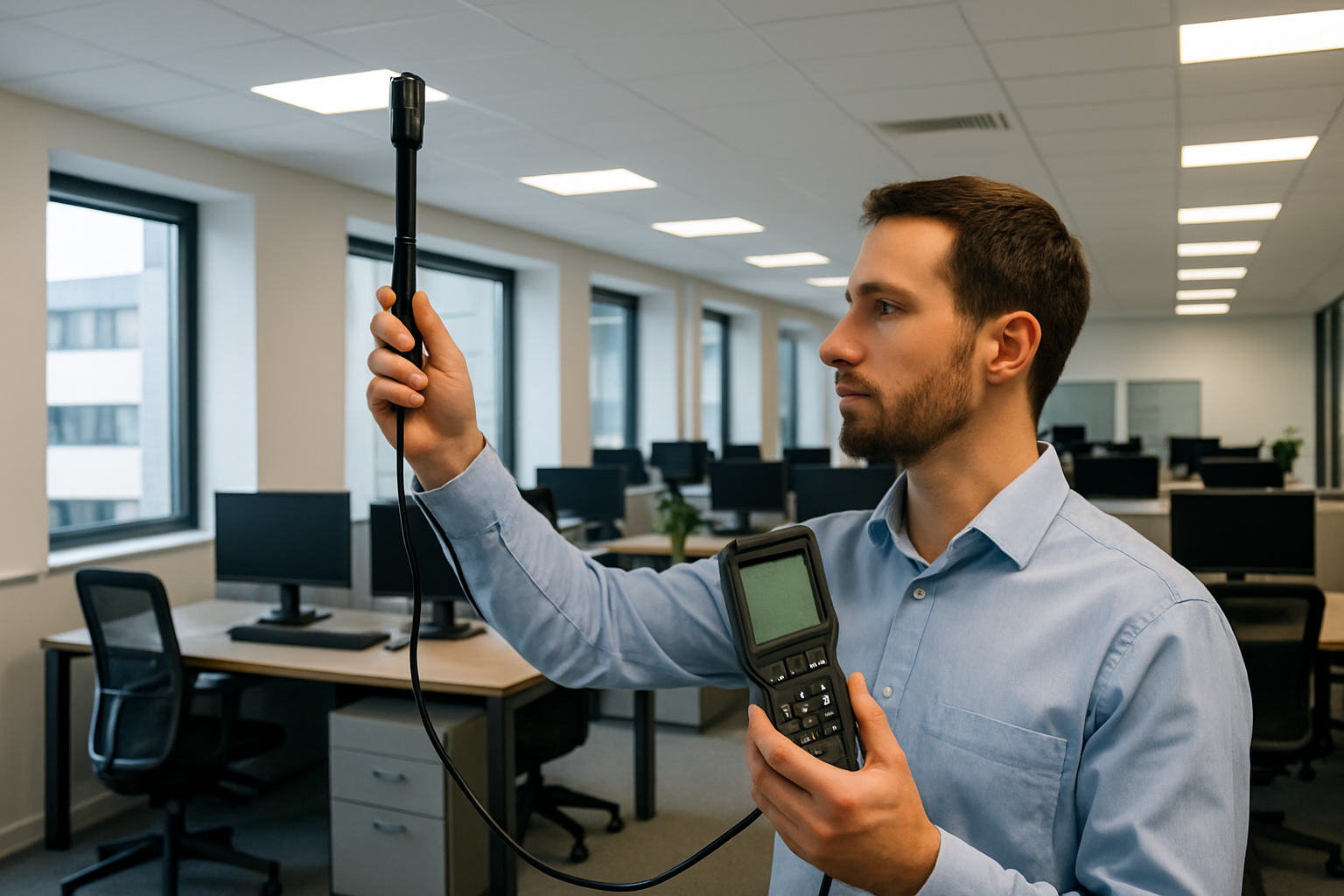
Optimize Workplace Health with Comprehensive Commercial Indoor Air Quality Testing
Healthy indoor air is a critical yet often overlooked part of a productive, safe, and compliant workplace. Comprehensive commercial indoor air quality (IAQ) testing gives building owners, facility managers, and employers the data they need to protect occupants, reduce liability, and optimize building performance. By understanding and managing the air people breathe for eight or more hours each day, organizations can improve health outcomes, enhance comfort, and support sustainability goals.
Why Commercial Indoor Air Quality Testing Matters
Indoor environments can contain significantly higher concentrations of pollutants than outdoor air, especially in tightly sealed commercial buildings. Large workforces, complex HVAC systems, cleaning chemicals, and building materials all influence the indoor environment. Systematic commercial indoor air quality testing identifies issues before they evolve into costly health, comfort, or operational problems.
Key reasons businesses invest in IAQ testing include:
- Employee health and wellness: Poor air quality can aggravate asthma and allergies and contribute to headaches, fatigue, and respiratory irritation.
- Productivity and performance: Clean indoor air is directly linked to better cognitive function, fewer sick days, and higher overall productivity.
- Regulatory compliance: IAQ testing supports compliance with OSHA guidelines, ASHRAE standards, and local building and health codes.
- Risk management: Early identification of contaminants helps reduce liability and prevent expensive remediation and legal disputes.
- Occupant satisfaction and retention: A healthy, comfortable environment improves tenant retention in commercial real estate and boosts employee morale.
In many cases, building operators are unaware of hidden IAQ problems until employees start to complain, absenteeism rises, or a serious incident forces investigation. Proactive commercial indoor air quality testing helps prevent this reactive cycle.
Common Indoor Air Contaminants in Commercial Buildings
Modern workplaces can harbor a wide range of air pollutants from both indoor and outdoor sources. Comprehensive IAQ testing evaluates multiple contaminant categories to provide an accurate picture of risk and exposure.
Some of the most common indoor air pollutants found in commercial settings include:
- Particulate matter (PM2.5 and PM10): Fine and coarse particles from outdoor traffic, construction, printers, cooking equipment, and industrial processes that can penetrate deep into the lungs.
- Volatile organic compounds (VOCs): Gases emitted by paints, adhesives, carpets, office furniture, cleaning agents, and office equipment such as printers and copiers.
- Formaldehyde and aldehydes: Off-gassing from composite wood products, furniture, textiles, and some insulation materials.
- Mold spores and biological contaminants: Mold, bacteria, viruses, and dust mites that thrive in high-humidity or water-damaged areas, often hidden behind walls or in HVAC systems.
- Carbon dioxide (CO₂): A key indicator of ventilation effectiveness and occupancy load; high levels can cause drowsiness, headaches, and impaired concentration.
- Carbon monoxide (CO): A dangerous, odorless gas from malfunctioning combustion equipment, parking garages, and loading docks.
- Ozone (O₃): Generated by some electronic equipment and present in outdoor air, ozone can irritate eyes and respiratory systems.
- Radon (in certain regions): A naturally occurring radioactive gas that can accumulate in lower levels of buildings, increasing long-term cancer risk.
While some pollutants are easily detectable through odor or visible signs (such as mold growth), many are invisible, odorless, and require professional IAQ testing and monitoring equipment to identify accurately.
What a Comprehensive Commercial IAQ Assessment Includes
A high-quality commercial indoor air quality assessment is more than just a few air samples. It is a structured, data-driven process designed to understand building conditions, identify contaminant sources, and propose targeted improvements. While every property is unique, a comprehensive IAQ assessment typically includes the following elements:
- Pre-assessment consultation and building review
- Collecting information about building age, occupancy patterns, renovation history, and known problem areas.
- Reviewing HVAC design, ventilation rates, filtration, and maintenance records.
- Discussing occupant complaints or symptoms and any seasonal patterns.
- On-site walkthrough and visual inspection
- Inspecting mechanical rooms, air handlers, ductwork, and rooftop units.
- Looking for signs of water intrusion, condensation, or visible mold growth.
- Identifying chemical storage areas, printing rooms, kitchens, and other potential pollutant sources.
- Targeted air and surface sampling
- Measuring temperature, relative humidity, and CO₂ as baseline comfort and ventilation indicators.
- Collecting air samples for particulate matter, VOCs, formaldehyde, and other specific contaminants of concern.
- Performing mold and microbial sampling where moisture issues or odor complaints exist.
- Testing for CO, ozone, and other gases, especially near combustion sources or loading docks.
- HVAC system performance evaluation
- Assessing air distribution and pressure balance between rooms and floors.
- Checking filter type, condition, and replacement schedule.
- Verifying outside air intake volumes and operation schedules versus design criteria.
- Data analysis and benchmarking
- Comparing test results to guidelines from ASHRAE, OSHA, EPA, and local health authorities.
- Identifying patterns, hotspots, and likely sources of contamination.
- Prioritizing issues based on health risk, regulatory impact, and occupant comfort.
- Written report and action plan
- Clear documentation of findings with easy-to-understand tables and charts.
- Practical recommendations for remediation, improved ventilation, filtration upgrades, and ongoing monitoring.
- Guidance on timelines, budgets, and responsibilities for implementation.
For many organizations, pairing a one-time comprehensive assessment with continuous IAQ monitoring provides the best long-term protection and insight, especially in mission-critical environments such as healthcare facilities, laboratories, data centers, and large corporate campuses.
Benefits of Ongoing IAQ Monitoring for Commercial Properties
While periodic testing is essential, continuous indoor air quality monitoring adds an additional layer of protection and operational intelligence. Modern sensor technology and cloud-based platforms make it possible to track IAQ parameters in real time and respond before occupants are affected.
Key benefits of ongoing IAQ monitoring in commercial buildings include:
- Early warning for developing issues: Instant alerts when CO₂, humidity, or particulate levels exceed thresholds allow facility teams to intervene quickly.
- Optimized ventilation and energy use: Demand-controlled ventilation systems can use IAQ data to adjust outdoor air intake, balancing air quality and energy efficiency.
- Improved occupant confidence: Sharing IAQ dashboards with tenants or employees demonstrates transparency and commitment to health.
- Data-driven maintenance planning: Trends in particle counts or pressure differentials can indicate filter loading, duct leaks, or failing equipment before breakdowns occur.
- Support for certifications and ESG goals: IAQ data helps document performance for green building certifications and environmental, social, and governance reporting.
For multi-tenant office buildings, schools, and healthcare facilities, continuous IAQ monitoring can become a critical component of a broader healthy building strategy, supporting infection control protocols and long-term wellness initiatives.
How to Choose a Commercial Indoor Air Quality Testing Partner
Selecting the right IAQ testing provider is essential for accurate results, credible reporting, and actionable recommendations. Not all testing services offer the same level of expertise, scope, or support, so evaluating providers carefully is important.
When comparing commercial indoor air quality testing partners, consider the following factors:
- Industry experience and credentials: Look for professionals with certifications in industrial hygiene, building science, or environmental health, and a track record in commercial and industrial facilities.
- Comprehensive testing capabilities: Ensure the provider can test for a full range of contaminants (particles, VOCs, microbial agents, gases) and evaluate mechanical systems and building envelopes.
- Standards-based approach: Confirm that methodologies and recommendations align with relevant ASHRAE, OSHA, and EPA guidelines, as well as local building codes.
- Clear reporting and communication: Reports should translate complex data into plain language with visual summaries, prioritized recommendations, and practical next steps.
- Integration with building operations: The best providers collaborate with facility and property management teams to align IAQ strategies with maintenance schedules, capital planning, and energy management goals.
- Support for ongoing monitoring: Ask whether the provider offers IAQ sensors, remote monitoring, and periodic re-testing to verify improvements and maintain performance.
By partnering with a qualified commercial IAQ testing specialist, organizations can create a roadmap for cleaner air, healthier occupants, and more efficient building operations.
Comprehensive commercial indoor air quality testing is an investment in workplace health, regulatory compliance, occupant satisfaction, and long-term asset value. From identifying hidden contaminants to optimizing HVAC systems and verifying ongoing performance, a data-driven IAQ program helps organizations create safer, more productive indoor environments.
Take the next step toward a healthier workplace. Schedule a commercial indoor air quality assessment today to understand your current conditions, uncover hidden risks, and develop a tailored plan to improve the air your employees, customers, and tenants breathe every day.
Keep Reading
- Elevate Building Maintenance with Innovative Thermal Imaging Inspection Techniques
- Comprehensive Fuel Tank Inspection: Ensuring Safety and Longevity
- Revealing the Unseen: How Thermal Imaging Inspection Enhances Building Safety
- Optimize Workplace Health with Comprehensive Commercial Indoor Air Quality Testing
- Revealing Hidden Building Flaws with Thermal Imaging Inspection