
July 27, 2026
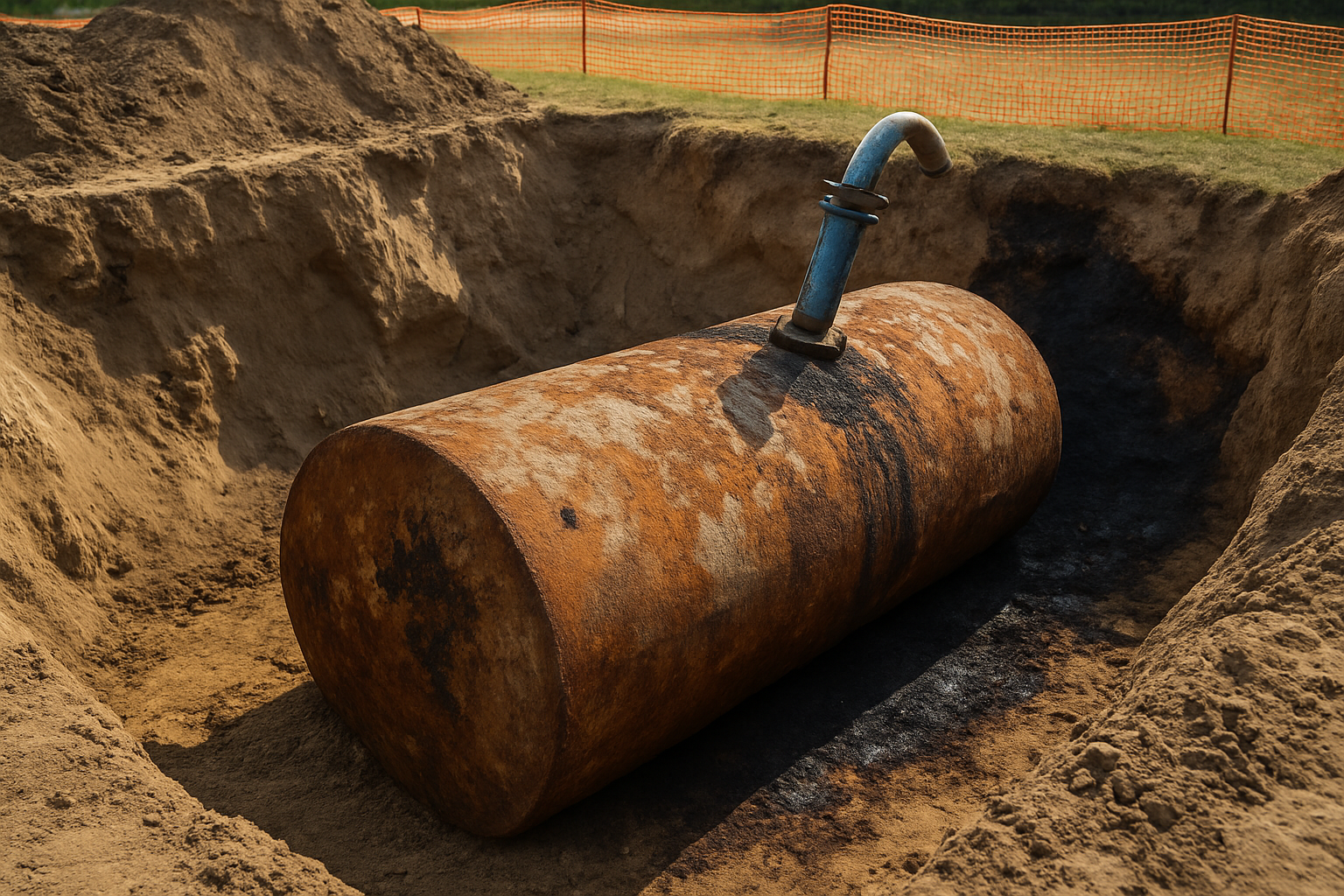
The Risks and Remediation of Abandoned Underground Fuel Tanks: A Complete Guide
Abandoned underground fuel tanks (USTs) are a hidden liability for property owners, developers, and businesses. Buried out of sight, they can leak, contaminate soil and groundwater, trigger costly cleanup orders, and derail real estate deals. This complete guide explains the risks, regulations, and proven strategies to properly manage and remediate abandoned underground fuel tanks.
What Is an Abandoned Underground Fuel Tank?
An abandoned underground fuel tank is any buried storage tank that is no longer in active use and has not been properly closed according to environmental regulations. These tanks were commonly used for:
- Gas stations and fuel depots
- Commercial and industrial facilities
- Residential heating oil storage
- Fleet fueling operations (trucks, buses, construction equipment)
Over time, steel tanks corrode, piping connections fail, and fuel can migrate into surrounding soils and groundwater. In many cases, tanks were simply left in the ground when usage stopped, with little documentation, testing, or closure work.
Key signs that a property may contain an abandoned underground fuel tank include:
- Former or existing fuel pumps, vent pipes, or fill pipes
- Historical use as a gas station or auto repair shop
- Old site plans or fire department records showing UST locations
- Unexplained petroleum odors or stained soil
Environmental and Legal Risks of Abandoned USTs
Abandoned underground fuel tanks expose property owners and operators to significant environmental, safety, and financial risks. Understanding these risks is essential for proper due diligence and risk management.
1. Soil and Groundwater Contamination
The most serious risk is leakage of fuel or heating oil into the subsurface environment. Typical contaminants include:
- Benzene, toluene, ethylbenzene, and xylene (BTEX)
- Polycyclic aromatic hydrocarbons (PAHs)
- Lead and other fuel additives
- MTBE or other oxygenates (in older gasoline)
Contamination can lead to:
- Vapor intrusion into buildings, impacting indoor air quality
- Impacts to private and municipal drinking water wells
- Harm to surface water, wetlands, and ecosystems
- Human exposure via inhalation, ingestion, or skin contact
2. Fire, Explosion, and Health Hazards
Even “empty” tanks can contain flammable vapors and residual product. These can pose:
- Fire and explosion hazards during construction or excavation
- Acute health risks to workers from fumes and confined space entry
- Long-term health risks from carcinogenic compounds such as benzene
Improperly abandoned tanks are particularly dangerous when disturbed by redevelopment or utility work.
3. Regulatory Compliance and Liability
In many jurisdictions, owners and operators of underground storage tanks are legally responsible for:
- Maintaining leak detection and corrosion protection for active USTs
- Properly closing tanks that are no longer in use
- Investigating suspected releases and reporting to regulators
- Cleaning up any confirmed contamination to approved standards
Failure to comply can result in:
- Regulatory enforcement actions and penalties
- Costly cleanup orders and monitoring requirements
- Liability for third-party property damage and health claims
4. Real Estate and Financing Impacts
Abandoned USTs can significantly affect property value and marketability. Common issues include:
- Difficulty obtaining financing or insurance
- Delays or failures in property sales or refinancing
- Mandated Phase I and Phase II Environmental Site Assessments (ESAs)
- Unexpected remediation costs discovered during due diligence
From an investor or developer perspective, unaddressed UST issues can turn an otherwise attractive property into a high-risk project.
How to Identify and Assess Abandoned Underground Fuel Tanks
Because abandoned USTs are buried, a structured assessment process is necessary to locate and evaluate them. This process typically involves historical research, site inspection, and subsurface investigation.
1. Historical and Regulatory Records Review
Environmental professionals often begin with a desk-based review to determine whether USTs are likely present. This may include:
- Reviewing historical aerial photographs and Sanborn fire insurance maps
- Checking state or local UST registration databases
- Obtaining fire department and building department records
- Interviewing current and former property owners, tenants, and neighbors
These records can provide valuable clues about past fuel storage and usage on the property.
2. Site Reconnaissance and Visual Clues
An on-site inspection can reveal visible evidence of underground tanks. Inspectors may look for:
- Fill pipes and vent pipes along building foundations or pavement
- Manholes, concrete pads, or unusual surface depressions
- Abandoned pump islands or fuel dispenser islands
- Utility records suggesting former fuel lines or conduits
While not definitive, these clues guide more targeted subsurface investigation.
3. Geophysical and Subsurface Investigation
To confirm the presence and extent of abandoned USTs, specialized geophysical and drilling methods are used, such as:
- Ground-penetrating radar (GPR)
- Magnetometry and electromagnetic surveys
- Test pits or trenching to expose suspected tank locations
- Soil borings and groundwater monitoring wells
Sampling and analysis of soil and groundwater help determine:
- Whether a release has occurred
- The horizontal and vertical extent of contamination
- The potential risk to receptors (buildings, wells, surface water)
Options for Closure and Remediation of Abandoned USTs
Once an abandoned underground fuel tank is identified, there are established regulatory pathways for closure and remediation. The specific approach depends on tank condition, site constraints, and contamination severity.
1. UST Closure by Removal
Tank removal is generally considered the most thorough and preferred closure option. Typical steps include:
- Obtaining necessary permits and notifications from local and state agencies
- Locating and exposing the tank through excavation
- Safely cleaning, purging, and inerting the tank to eliminate vapors
- Cutting and removing the tank from the ground
- Inspecting for visible leaks, holes, or staining
- Collecting confirmatory soil samples from beneath and around the tank
If contamination is discovered, further investigation and remediation may be required before the site can be closed.
2. UST Closure In Place
In some situations, removal is impractical because of structural, safety, or access constraints. In-place closure may be allowed if approved by regulators. This process often involves:
- Cleaning and inerting the tank interior
- Filling the tank with an inert solid material (e.g., sand, foam, slurry)
- Documenting the closure and recording it in property records
- Completing soil and/or groundwater sampling around the tank
Even when closed in place, evidence of a release may trigger further corrective action.
3. Soil and Groundwater Remediation Methods
If a release from an abandoned underground fuel tank has impacted soil or groundwater, remediation is required. Common technologies include:
- Excavation and off-site disposal: Removing contaminated soil and transporting it to a licensed facility.
- Soil vapor extraction (SVE): Applying vacuum to pull volatile contaminants out of the soil.
- Air sparging: Injecting air into groundwater to strip volatile contaminants and enhance biodegradation.
- In-situ chemical oxidation or reduction: Injecting reagents to chemically break down contaminants in place.
- Bioremediation: Stimulating naturally occurring microbes to degrade petroleum hydrocarbons.
- Pump-and-treat systems: Extracting contaminated groundwater for treatment and discharge or re-injection.
The selected remedy is tailored to site conditions, regulatory requirements, risk levels, and project budgets.
4. Documentation, Regulatory Closure, and Long-Term Monitoring
Achieving formal “no further action” or closure status from regulators is essential for reducing liability and improving property value. The process typically includes:
- Submitting closure reports with tank removal records, waste manifests, and analytical data
- Demonstrating that regulatory cleanup levels have been met or risks are controlled
- Implementing institutional controls (e.g., deed restrictions) if contamination remains in place
- Performing periodic monitoring where required by the closure plan
Proper documentation also supports smoother real estate transactions and financing in the future.
Best Practices for Property Owners and Developers
Whether you own a single commercial property, manage a portfolio, or are planning a redevelopment project, proactive management of abandoned underground fuel tanks can save time, money, and legal headaches.
1. Conduct Environmental Due Diligence Early
Before buying, selling, or redeveloping a property, consider:
- Commissioning a Phase I Environmental Site Assessment (ESA)
- Following up with Phase II sampling if USTs or releases are suspected
- Reviewing historical uses and regulatory records for fuel storage indicators
Early identification of UST issues allows you to budget appropriately and negotiate responsibilities in purchase agreements.
2. Work with Qualified Environmental Professionals
UST closure and remediation require specialized technical and regulatory expertise. When selecting a consultant or contractor, look for:
- Experience with underground fuel tank removal and closure
- Familiarity with local, state, and federal storage tank regulations
- Proven track record of achieving regulatory closure
- Strong safety performance and appropriate insurance coverage
3. Plan for Health, Safety, and Community Communication
Tank removal and remediation activities can affect workers, neighbors, and nearby businesses. Best practices include:
- Developing a site-specific health and safety plan (HASP)
- Implementing proper air monitoring and vapor controls
- Notifying nearby occupants of major excavation or remediation work
- Coordinating traffic, access, and noise controls with local authorities
4. Protect Yourself with Proper Documentation
Maintain complete and organized records for all UST-related activities, including:
- Tank registration, permits, and closure approvals
- Site investigation and sampling reports
- Waste profiles, manifests, and disposal receipts
- Regulatory correspondence and “no further action” letters
These records are crucial for demonstrating compliance, supporting future transactions, and defending against potential claims.
Conclusion: Take Action on Abandoned Underground Fuel Tanks
Abandoned underground fuel tanks may be out of sight, but they should never be out of mind. From hidden environmental contamination to delayed real estate deals and regulatory penalties, the risks are real and potentially severe. By identifying tanks early, assessing potential releases, and following proven closure and remediation practices, you can protect health, safeguard property value, and reduce long-term liability. If you suspect an abandoned underground fuel tank on your property or are planning a project on a site with a history of fuel storage, consult a qualified environmental professional today to evaluate your options and develop a clear, cost-effective remediation strategy.
Keep Reading
- Revolutionize Building Maintenance with Cutting-Edge Thermal Imaging Inspection
- Thermal Inspection: Unveiling Hidden Problems for Optimal Building Performance
- How Air Quality Experts Transform Indoor Environments for Better Health
- The Ultimate Guide to WDO Inspection: Protect Your Home from Wood-Destroying Organisms
- Harness the Potential of Thermal Imaging Inspection for Unseen Building Insights